
miércoles, 29 de octubre de 2014

jueves, 26 de enero de 2012
miércoles, 5 de octubre de 2011
4º ESO - COMPETENCIAS - Advertising campaign
TASKS (you have to send your teacher all the tasks by email)
1. October 7th: groups and topic chosen
2. October 14th: slogan
3. October 21st: image (you must make it up)
4. October 26th: final product
The oral presentation of your campaign will be on the 28th October. You must include the following information:
- Explain the process of your campaign: context, recipient, objective,...
- What does the image mean? Explain it (colour, picture,...)
- What does the slogan mean? Explain it (type of sentence (affirmative, negative, question, imperative, present simple,... why?), type of letter (big, small, colour,...), position of the slogan, etc.)
GOOD LUCK!!
lunes, 3 de octubre de 2011
4º ESO Competencias
In this term, our competence task is to create an advertising campaign.

You must form groups of three. Every team must choose a different topic. Then each group will present their advertising campaign orally.
Be as creative as you like as this will form part of your assessment.
Possible topics for you to choose from:
1.Attract students to our school.
2.Fund-raiser (school party - solidarity project)
3.'Don't be a couch potato' – (choose an activity and encourage other students to take it up)
4.Gender Violence.
5.Environment – local awareness.
6.Attract tourists to Pamplona.
7.Alcohol e.g. “Don’t Drink and Drive”.
8.Bullying.
9.Discrimination.
10.Drugs.
11.Smoking.
12.Social Networks.
13.Child Labour.
Types of advertising campaigns:
How to design an effective advertising campaign?
Download document
Famous advertising campaign slogans

You must form groups of three. Every team must choose a different topic. Then each group will present their advertising campaign orally.
Be as creative as you like as this will form part of your assessment.
Possible topics for you to choose from:
1.Attract students to our school.
2.Fund-raiser (school party - solidarity project)
3.'Don't be a couch potato' – (choose an activity and encourage other students to take it up)
4.Gender Violence.
5.Environment – local awareness.
6.Attract tourists to Pamplona.
7.Alcohol e.g. “Don’t Drink and Drive”.
8.Bullying.
9.Discrimination.
10.Drugs.
11.Smoking.
12.Social Networks.
13.Child Labour.
Types of advertising campaigns:
Tipos De Campaña
View more presentations from viahumana
How to design an effective advertising campaign?
Download document
Famous advertising campaign slogans
lunes, 26 de septiembre de 2011
RELATIVE CLAUSES
Here you go some links to work on relative clauses:
1. Subject or object
2. Relative pronoun: necessary or not? (who/which)
3. Relative pronoun: necessary or not? (who/which)
4. Formation
5. Rephrasing
6. Test 1
7. Test 2
8. who, which, where: 1, 2, 3
9. who or which
10. who or which
12. Complete the sentence and rephrasing
HAVE FUN!!!
1. Subject or object
2. Relative pronoun: necessary or not? (who/which)
3. Relative pronoun: necessary or not? (who/which)
4. Formation
5. Rephrasing
6. Test 1
7. Test 2
8. who, which, where: 1, 2, 3
9. who or which
10. who or which
12. Complete the sentence and rephrasing
HAVE FUN!!!
jueves, 5 de mayo de 2011
miércoles, 4 de mayo de 2011
jueves, 17 de febrero de 2011
Abierto el plazo de matricula por "libre" en la Escuela Oficial de Idiomas de Pamplona
Se ha abierto el plazo de matrícula por libre en la Escuela Oficial de Idiomas de Pamplona.
El plazo de matrícula es del 14 al 25 de Febrero.
Para mayor información sobre fechas, requisitos, tasas y documentación necesaria se puede consultar el siguiente enlace.
El plazo de matrícula es del 14 al 25 de Febrero.
Para mayor información sobre fechas, requisitos, tasas y documentación necesaria se puede consultar el siguiente enlace.
miércoles, 16 de febrero de 2011
EOIDNA Exam Dates 2011
- Intermediate level (B1):
Written exam: Friday, 3rd of June at 16:30.
Oral exam: From Monday the 9th of June to Monday the 20th of June. (approximate dates)
- First Advanced level (B1+):
Written exam: Wednesday, 11th of May at 16:30.
Oral exam: From Tuesday the 31st of May to Friday the 17th of June. (approximate dates)
Written exam: Friday, 3rd of June at 16:30.
Oral exam: From Monday the 9th of June to Monday the 20th of June. (approximate dates)
- First Advanced level (B1+):
Written exam: Wednesday, 11th of May at 16:30.
Oral exam: From Tuesday the 31st of May to Friday the 17th of June. (approximate dates)
English Mock Orals - EOIDNA
Like every year, an examiner from the EOIDNA will come to Jesuitinas and carry out a "mock oral". This is a great opportunity for students to prepare for the oral exam and get familiar with the exam techniques.
The mock oral will be carried out on the 14th of March from 9:00 to 11:00 at school.
The students that can participate in the mock oral are those in the Intermediate and first Advanced level. The pre-intermediate level can attend as spectators.
It is convenient for all students to prepare the mock oral.
sábado, 29 de enero de 2011
Peace Day - Lip dub
The United Nations (UN) International Day of Peace is celebrated on the 21st September each year to recognize the efforts of those who have worked hard to end conflict and promote peace. This year at school, we celebrated Peace Day on January 28th recording our first lip dub.
“A lip dub is a type of video that combines lip synching and audio dubbing to make a music video. It is made by filming individuals or a group of people lip synching while listening to a song or any recorded audio then dubbing over it in post editing with the original audio of the song. There is often some form of mobile audio device used such as an MP3 player. Often they look like simple music videos, although many involve a lot of preparation and production. Lip dubs can be done in a single unedited shot that often travels through different rooms and situations within a building”. (Wikipedia)
A good lip dub has the characteristics, or at least the appearance, of spontaneity, authenticity, group participation and fun.
Below you can see photos of how we prepared the lip dub:


This is the final product. Excellent work and great fun!
jueves, 27 de enero de 2011
Webquest Natural Disasters - 4º ESO Ampliación de Inglés
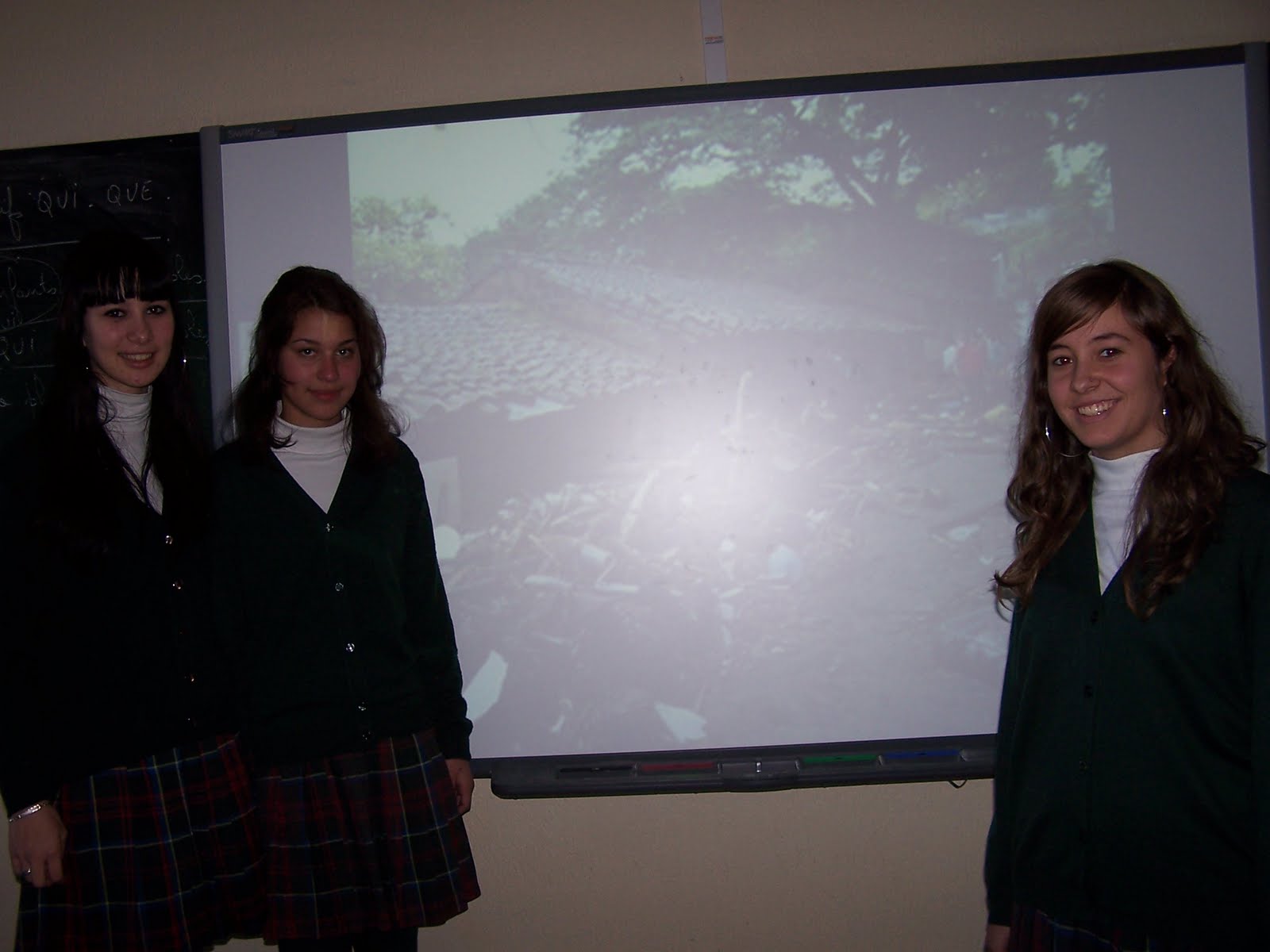
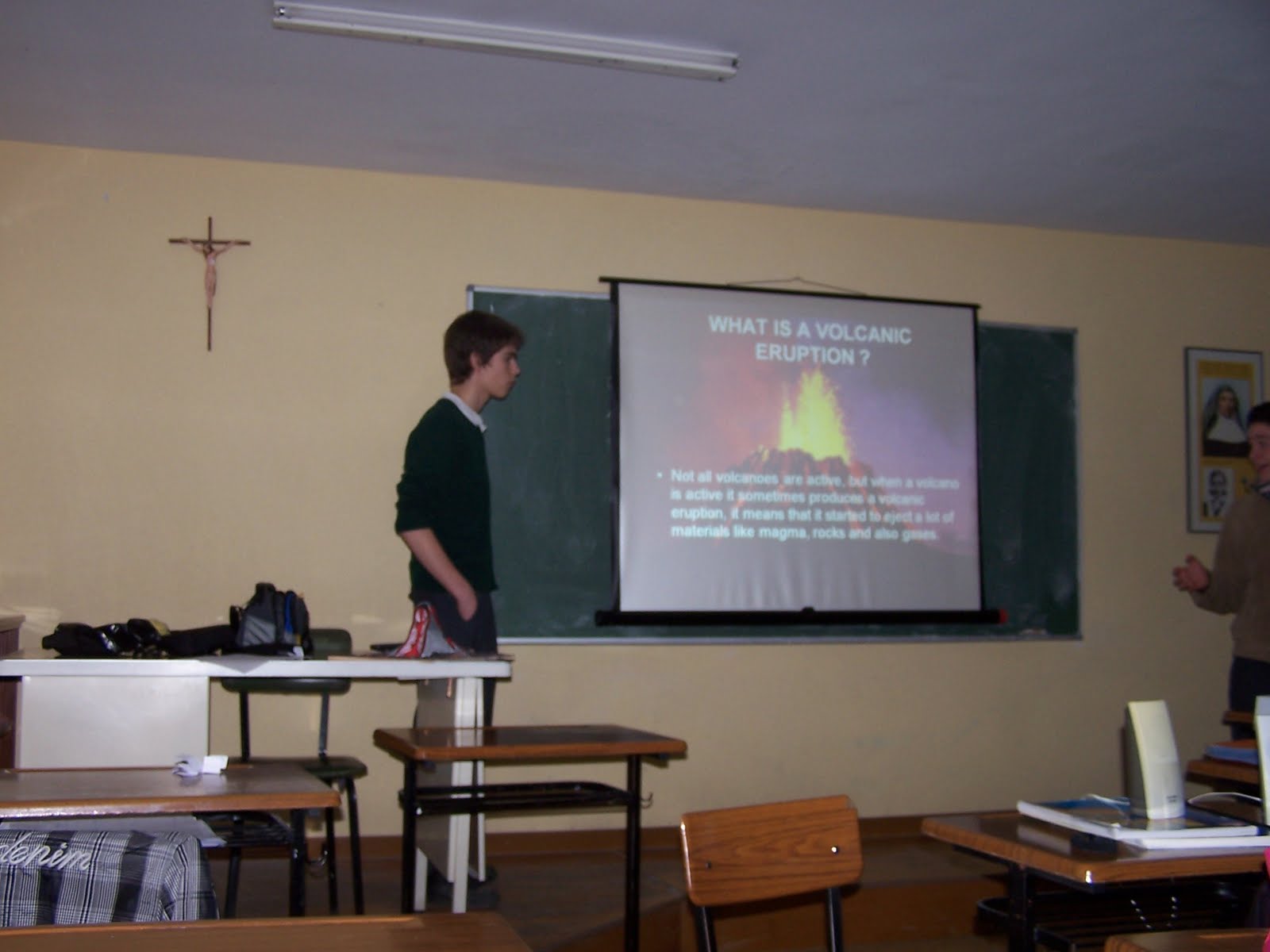
This week 4º ESO "Ampliación de Inglés" students have presented their project work after successfully completing the webquest "Natural Disasters". The presentations that were done were of a very high standard. I would like to congratulate them for their hard work and effort. We have learnt a lot about natural disasters and I'm sure that in an event of a natural disaster we are more aware of the precautions that we must take.






martes, 5 de octubre de 2010
El 65 % del total de las ofertas de empleo exige un idioma.
Se busca profesional con dominio de idiomas
En España, un 65% del total de las ofertas de empleo exige el conocimiento de una lengua
Por Pedro Simón (El Mundo, Su Dinero,Actualidad , nº 121)
Los buscadores de empleo A y B llegan con corbata y gomina, con su título de licenciado bajo el brazo y sin experiencia laboral alguna...Tras unos días, se produce al fin la llamada esperada:
"Lo sentimos, pero hemos seleccionado al otro canditato."
¿Al otro? ¿Será la labia? ¿Sus zapatos relucientes? ¿O acaso un enchufe que desconoce el candidato B? La respuesta está en el idioma. El candidato A sabía inglés y pudo salir del trance ante un par de preguntillas a la británica: el candidato B se puso colorado como un tomate y arrojó la toalla.
" Es que yo, de inglés, en fin ... ", balbuceó.
Tal y como se está poniendo el mercado laboral, lo mejor que les puede ocurrir a unos padres es que sus hijos sepan idiomas. Cuantos más, mejor.
Con la figura del trabajador europeo campando a sus anchas por el viejo continente (...) conocer en profundidad una lengua es el valor añadido (cuando no condición indispensable) que busca el empresario (...) Un 65 % de las ofertas de trabajo de cualquier tipo exige el conocimiento de otra lengua.
(Fragmento sacado de "Se busca Profesional con domino de idiomas", El Mundo, Su Dinero, Actualidad, nº 121, por Pedro Simón)
Actividades:
Realiza estas actividades y envíaselas por correo electrónico a tu profesora de inglés antes del 19 de octubre:
- Comenta el artículo.
- ¿Por qué deberíamos aprender idiomas? Escribe tu opinión , justificada.
- Busca ofertas de trabajo en periódicos donde uno de los requisitos sea saber idiomas (inglés, euskera, francés , alemán, chino, etc...)
Les Luthiers son un grupo argentino musical de humor. A continuación te presentamos un sketch de este famoso grupo artístico en el que en una manera muy particular hacen una reflexión sobre la importancia de saber idiomas. ¡Disfrútalo!
martes, 25 de mayo de 2010
Suscribirse a:
Entradas (Atom)